

Choose the timer that fits the circuit.
TM301, the 30A TM301HD and REDARC TIM05/TIM06 are designed for different timing jobs. Compare function, current, wiring and price—then choose the best fit for the application.
Which one is best?
There is no universal winner. Match the timer to the output, load and installation.
Compact, flexible control
Low-current switching or control of a separate relay through volt-free contacts.
A$220
Heavy-duty multifunction timing
A 30A model with delay, timed output, cycle and INH+ reset.
A$300
Delay OFF in a relay socket
Delayed turn-off or temporary output at turn-on.
A$219
Delay ON in a relay socket
Delayed turn-on or temporary output at turn-off.
A$219
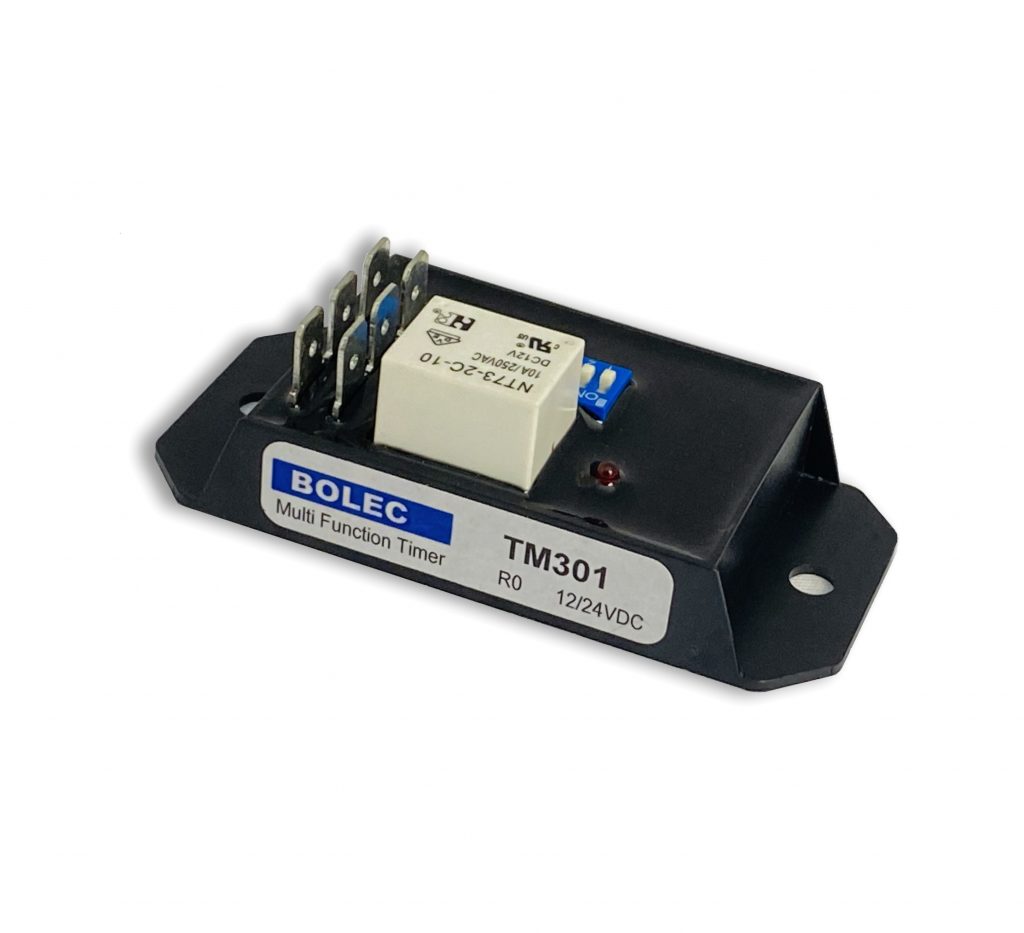
TM301
Choose TM301 when the timer is switching a small resistive load or driving an external relay. Its volt-free changeover contacts provide flexible circuit integration.
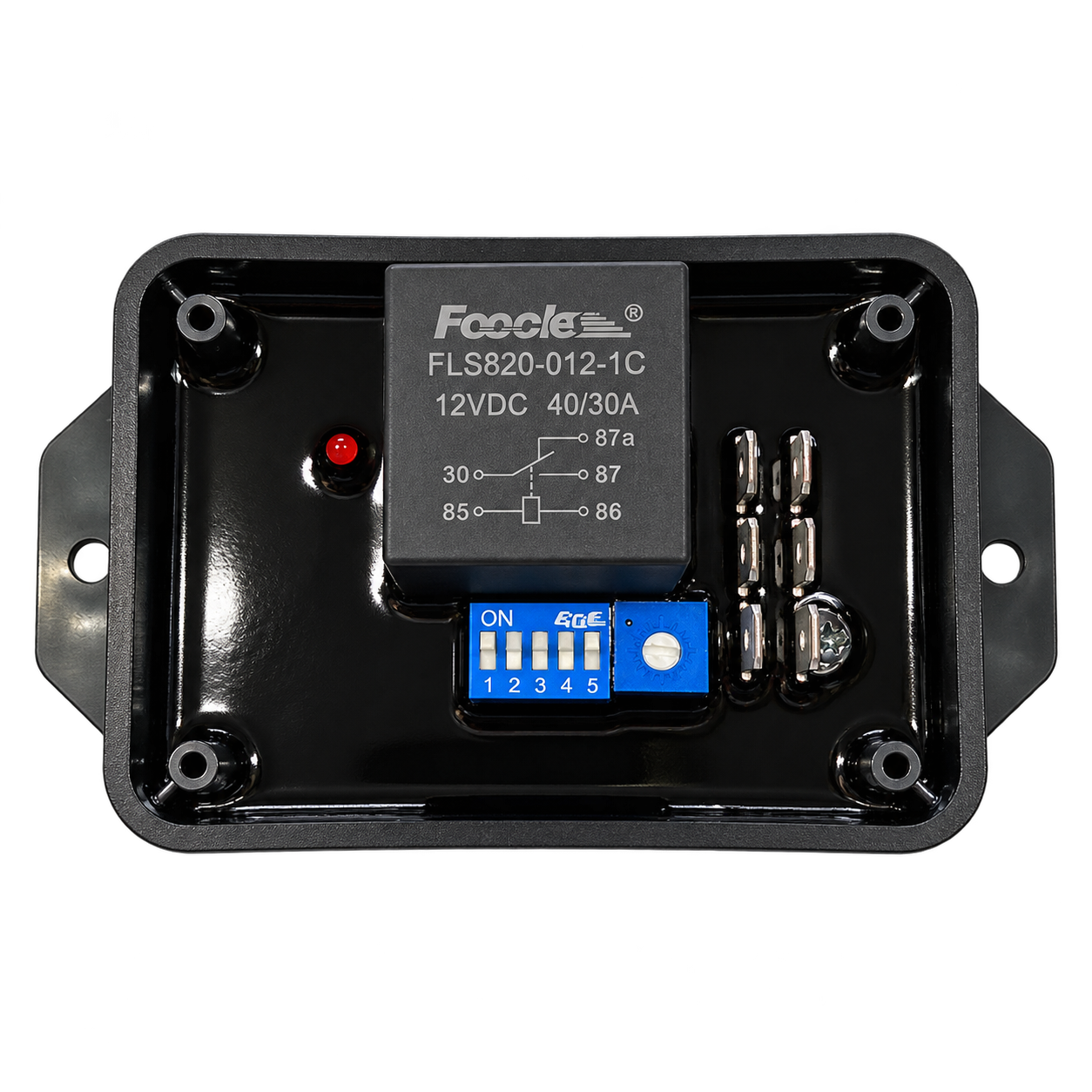
TM301HD
TM301HD retains the core timing logic and terminal functions of TM301, with a 30A heavy-duty relay model. Choose the fixed 12VDC or fixed 24VDC version; the HD models do not have customer voltage selection.

What must the output actually do?
Define the electrical sequence first. Similar function names can hide different trigger and wiring arrangements.
01
Delayed turn-on
Wait for the selected time, then energise the output.
02
Temporary output
Energise immediately, then switch off after the selected time.
03
Delayed turn-off
Keep the output energised for a period after the initiating input changes.
04
Continuous cycle
Repeat the selected on/off timing sequence for cycling or flashing.

Two specialised relay-socket timers
TIM05 and TIM06 suit a standard automotive relay base and a clearly defined function. Both support 12V/24V negative-ground systems, 1–60 seconds or minutes, and a 10A maximum timed positive output.
TIM05
Delayed turn OFF or temporary output at turn ON.
TIM06
Delayed turn ON or temporary output at turn OFF.
Pin 30 connects to battery positive. TIM05/TIM06 provide a timed positive output and cannot use Pin 30 to switch ground.
Everything that changes the decision.
TM301HD is the high-current multifunction option—not a universal winner.
| Specification | TM301 | TM301HD 12V | TM301HD 24V | TIM05 | TIM06 |
|---|---|---|---|---|---|
| Supply | 12/24V selectable | 12V fixed | 24V fixed | 12/24V | 12/24V |
| Output rating | 3A @ 12V; 1.5A @ 24V | 30A heavy-duty model | 30A heavy-duty model | 10A max | 10A max |
| Output type | Volt-free changeover | Volt-free changeover | Volt-free changeover | Timed positive | Timed positive |
| Main modes | Delay / timed / cycle | Delay / timed / cycle | Delay / timed / cycle | Delay OFF / temp ON | Delay ON / temp OFF |
| Time range | 1–30 or 2–60 sec/min | 1–30 or 2–60 sec/min | 1–30 or 2–60 sec/min | 1–60 sec/min | 1–60 sec/min |
| Price | A$220 | A$300 | A$300 | A$219 incl. GST | A$219 incl. GST |
Prices are the supplied/current Australian prices at publication. Confirm current price and tax treatment before ordering.
Five checks prevent the wrong timer.
Send Bolec the complete sequence for a starter solenoid, motor, contactor, lamp load or unusual trigger arrangement.
30A does not mean every 30A load is safe to switch directly.
Inductive loads can have high pull-in current and back-EMF. Check actual load, duty cycle and suppression. A separate relay or contactor may still be required.
- 01Confirm 12VDC or 24VDC supply.
- 02Write the trigger-to-output sequence.
- 03Check running and inrush current.
- 04Choose timed positive or volt-free contacts.
- 05Confirm mounting and terminals.
Timer relay FAQ
Which model is best for a starter-solenoid timer?
TM301HD can provide an immediate timed output and is offered as a 30A heavy-duty model. Still check solenoid pull-in current, holding current, duty and suppression; use a separate relay or contactor where required.
Can one TM301HD work on both 12V and 24V?
No. Choose the dedicated TM301HD 12VDC or TM301HD 24VDC model. Standard TM301 uses a DIP switch to select 12V or 24V.
Is TM301HD a direct replacement for TIM05 or TIM06?
No. It can perform comparable functions, but terminal arrangement, trigger logic and external wiring differ. Confirm the exact sequence before substitution.
Describe what must happen—and for how long.
Send the voltage, load/current, trigger method and timing sequence.